
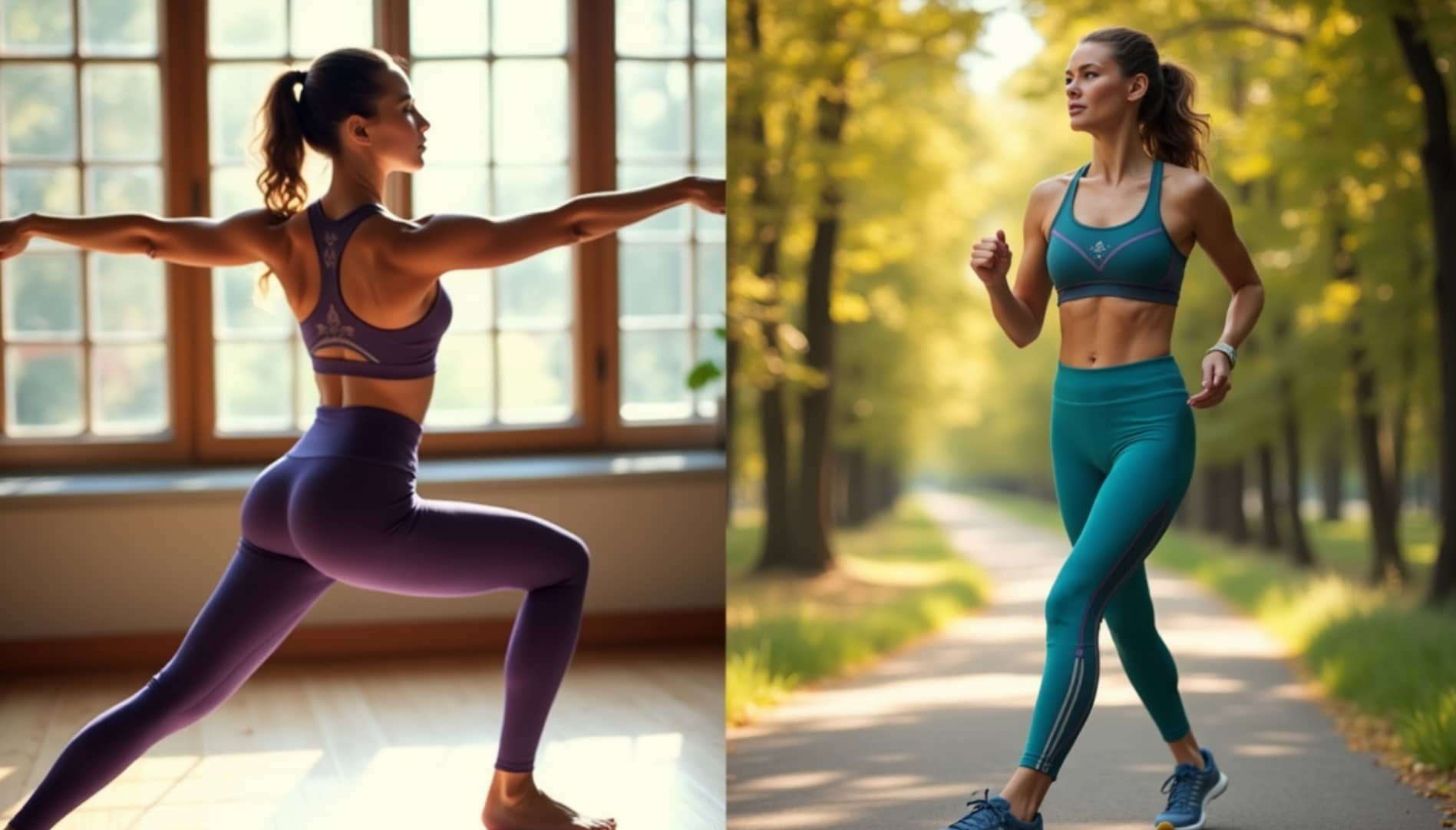
Many athletes and fitness enthusiasts struggle to choose between yoga leggings and running leggings for their workouts. What is the difference between yoga leggings and running leggings? These specialized pieces of activewear serve distinct purposes and offer unique features designed for their specific activities. Understanding these differences helps you make better choices for your workout wardrobe.
This comprehensive guide examines yoga leggings vs running leggings across several key aspects. We’ll explore the specific materials used in each type, compare their compression levels and fit characteristics, and analyze important design features. You’ll learn about moisture-wicking properties, storage options, and essential factors to consider when selecting the right pair for your preferred activity.
Table of Contents
Material and Fabric Differences
The foundation of any high-performance legging lies in its fabric composition, and this is where yoga leggings and running leggings show their first major distinction. Understanding these material differences helps explain why each type excels in its intended activity.
Yoga legging fabrics
Yoga leggings prioritize flexibility and comfort through their fabric selection. These leggings typically feature a blend of ultra-soft, breathable materials with high elasticity. The most common composition includes:
| Material | Typical Percentage |
|---|---|
| Nylon/Polyamide | 80-90% |
| Spandex/Lycra | 10-20% |
This combination creates a silk-like feel against the skin while providing the necessary stretch for complex yoga poses. The higher percentage of nylon delivers that signature buttery-soft texture that yoga enthusiasts prize, while maintaining shape retention through extended wear.
Running legging fabrics
Running leggings take a different approach, focusing on durability and support. These leggings commonly use polyester as their base material, combined with performance-enhancing elements:
- Primary materials: Polyester (80-90%) with spandex (10-15%)
- Additional features: Mesh paneling for ventilation
- Reinforced areas: Strategic compression zones for muscle support
The polyester-dominant composition offers superior durability and resistance to wear, making these leggings ideal for the repetitive motion of running. Many running leggings also incorporate specialized synthetic blends that enhance their performance capabilities.
Moisture-wicking properties
Both yoga and running leggings incorporate moisture management technology, but with different emphases. Running leggings typically feature more advanced moisture-wicking capabilities due to the higher intensity of the activity. This is achieved through:
The fabric’s structure creates tiny channels that pull sweat away from the skin to the outer surface, where it can evaporate quickly. Running leggings often incorporate additional features like mesh panels and ventilation zones to enhance this effect. While yoga leggings also offer moisture-wicking properties, they focus more on breathability and comfort during poses rather than intense sweat management.
The synthetic fibers used in both types of leggings work through capillary action, drawing moisture away from the skin. However, running leggings often include specialized treatments and fabric technologies that accelerate this process, making them more efficient at handling heavy perspiration during intense cardio sessions.
Fit and Compression
One of the most significant distinctions between yoga and running leggings lies in their compression levels and fit characteristics. Understanding these differences is crucial for maximizing both comfort and performance in your chosen activity.
Yoga legging fit
Yoga leggings prioritize freedom of movement while maintaining coverage during various poses. These leggings feature:
- A snug yet non-restrictive fit that allows for ease of movement
- Ample stretch in all directions to accommodate various yoga poses
- A high-quality waistband that stays in place without digging in
The ideal yoga legging should follow the principle of skin-friendly fit without excessive tightness. This design allows practitioners to clearly observe their form and make necessary adjustments during practice, while preventing any embarrassing slips during complex poses.
Running legging compression
Running leggings typically offer higher compression levels compared to their yoga counterparts. The compression profile varies by zone:
| Body Area | Compression Level | Purpose |
|---|---|---|
| Ankles | Highest | Improve venous return |
| Calves | Medium-high | Reduce muscle oscillation |
| Thighs | Medium | Support larger muscle groups |
| Waist | Firm | Maintain position during movement |
This graduated compression design helps improve blood flow and provides targeted muscle support during repetitive running motions. The tighter fit is essential for preventing the leggings from slipping during high-impact activities.
Impact on performance
The compression and fit characteristics of running leggings contribute significantly to athletic performance through several mechanisms:
- Enhanced Blood Circulation
- Promotes better oxygen delivery to muscles
- Helps remove metabolic waste products
- Reduces blood pooling in lower extremities
- Muscle Support Benefits
- Decreases muscle oscillation during movement
- Reduces muscle fatigue during extended activities
- Minimizes the risk of strain and muscle trauma
The targeted compression in running leggings particularly benefits the groin, hamstrings, quadriceps, and calves. This support system allows athletes to maintain higher performance levels for longer periods while potentially reducing the risk of injury.
For yoga practitioners, the focus shifts from compression to movement optimization. The right fit enables better proprioception – the body’s ability to sense movement and position – which is crucial for maintaining proper alignment in poses. This enhanced awareness contributes to a more focused and effective practice.
When selecting either type of legging, the key is finding the right balance between compression and comfort. Running leggings should feel snug but not restrictive, while yoga leggings should offer enough support without limiting range of motion. In both cases, proper sizing is crucial – too tight, and you risk compromising circulation; too loose, and you lose the benefits of the intended design features.
Design Features and Functionality
Beyond material composition and fit characteristics, the functional design elements of yoga and running leggings showcase distinct features tailored to their respective activities. These thoughtful design choices significantly impact performance and user experience during workouts.
Waistband styles
The waistband design plays a crucial role in both yoga and running leggings, though each serves different purposes. Yoga leggings typically feature wide, high-rise waistbands that provide coverage during inversions and stretching movements. These waistbands often include:
| Feature | Benefit |
|---|---|
| Wide elastic band | Prevents rolling during poses |
| High-rise cut | Ensures coverage in all positions |
| Adjustable drawstring | Allows customized fit |
Running leggings, conversely, incorporate compression-focused waistbands with targeted support zones. These waistbands are engineered to maintain position during high-impact activities while providing core stability.
Pockets and storage
Storage solutions differ significantly between yoga and running leggings, reflecting the unique needs of each activity. Running leggings prioritize practical storage with:
- Side pockets large enough for smartphones and keys
- Secure zippered compartments for valuables
- Discreet waistband pockets for small items
Yoga leggings take a more minimalist approach to storage, featuring hidden waistband pockets that maintain a sleek silhouette without compromising the legging’s stretch capability. These storage solutions are designed to be functional yet unobtrusive, allowing practitioners to move freely through their poses while keeping essential items close at hand.
Reflective elements
Safety features become particularly important in running leggings, especially for those who exercise in low-light conditions. Running leggings incorporate reflective elements through:
- Strategic placement
- Along outer seams
- Across back panels
- Around ankle areas
- Visibility enhancement
- Reflective tape that catches light from all angles
- High-visibility details integrated into design patterns
- Strategic placement for maximum visibility to vehicles
These reflective features are typically minimal or absent in yoga leggings, as they’re primarily designed for indoor use. Instead, yoga leggings focus on esthetic details that complement their athleisure appeal, such as mesh cutouts and decorative elements that don’t compromise functionality.
The integration of these design features demonstrates how each type of legging has evolved to meet specific activity requirements. Running leggings emphasize safety and practical storage without sacrificing performance, while yoga leggings maintain a balance between functionality and unrestricted movement. These thoughtful design choices ensure that whether you’re flowing through a vinyasa sequence or logging miles on the road, your leggings enhance rather than hinder your performance.
Choosing the Right Leggings for Your Activity
Selecting the perfect pair of leggings requires careful consideration of your specific workout needs and preferences. Making an informed choice between yoga leggings and running leggings can significantly impact your exercise experience and performance.
Factors to consider
When choosing between yoga leggings and running leggings, several key factors deserve your attention:
| Activity Type | Primary Considerations | Secondary Features |
|---|---|---|
| Yoga | Flexibility, Breathability | Minimal seams, Soft texture |
| Running | Compression, Durability | Storage, Reflective elements |
The intensity and nature of your workout should guide your selection. High-impact activities like running demand more supportive features, while activities focused on flexibility benefit from lighter, stretchier materials.
Temperature and environment also play crucial roles in your choice:
- Indoor activities may prioritize breathability and moisture management
- Outdoor workouts require additional features like UV protection and weather resistance
- Seasonal considerations affect fabric weight and coverage needs
Common buying mistakes
Understanding common purchasing errors can help you make better choices when selecting athletic leggings. The most frequent mistakes include:
- Incorrect sizing: Choosing leggings that are too tight or loose can compromise both comfort and performance. Remember that running leggings should fit snugly while yoga leggings need room for movement.
- Prioritizing style over function: While esthetics matter, performance features should be your primary consideration. Many athletes make the mistake of choosing fashionable designs that lack essential activity-specific features.
- Ignoring material properties: Different activities require specific fabric characteristics. Cotton-based leggings might feel comfortable initially but can become heavy and uncomfortable when wet with sweat.
- Overlooking weather requirements: Failing to consider seasonal needs can lead to purchasing leggings that are too warm for summer workouts or insufficient for winter training.
Recommendations for yoga vs running
For Yoga Practice: Select leggings that offer unrestricted movement while maintaining coverage during poses. Look for these essential features:
- High-rise waistband with minimal compression
- Four-way stretch fabric for maximum flexibility
- Minimal seams to prevent irritation
- Moisture-wicking properties for hot yoga sessions
For Running Activities: Choose leggings that provide support and protection during repetitive impact. Priority features include:
- Graduated compression for muscle support
- Secure storage options for essentials
- Reflective elements for visibility
- Durable seam construction for longevity
When investing in athletic leggings, consider maintaining separate pairs for different activities. This approach ensures optimal performance and extends the life of your activewear. Quality matters more than quantity – investing in fewer, high-quality pieces specifically designed for your primary activities will serve you better than having multiple pairs of generic leggings.
For those new to either activity, start with one high-quality pair designed specifically for your primary workout type. This allows you to experience the benefits of activity-specific features and make more informed decisions for future purchases. Remember that proper care, including following washing instructions and avoiding fabric softeners, will help maintain the performance properties of your chosen leggings.
Understanding the distinction between yoga leggings and running leggings helps ensure that your workout wardrobe supports rather than hinders your fitness goals. By considering these factors and avoiding common mistakes, you can select leggings that enhance your performance and provide lasting value.
Conclusion
Yoga leggings and running leggings represent distinct categories of athletic wear, each engineered with specific features that maximize performance in their intended activities. Material composition, compression levels, and design elements work together to create purpose-built garments – yoga leggings excel in flexibility and unrestricted movement, while running leggings provide essential support and safety features for high-impact activities. These differences highlight how specialized athletic wear can significantly enhance workout effectiveness through thoughtful design and engineering.
Smart selection of activity-specific leggings proves essential for both comfort and performance optimization. Athletes who choose leggings based on their primary activity requirements benefit from better workout experiences and extended garment longevity. Knowledge of these key differences empowers fitness enthusiasts to build practical, high-performance workout wardrobes that serve their specific needs rather than settling for generic alternatives that might compromise their athletic goals.
