
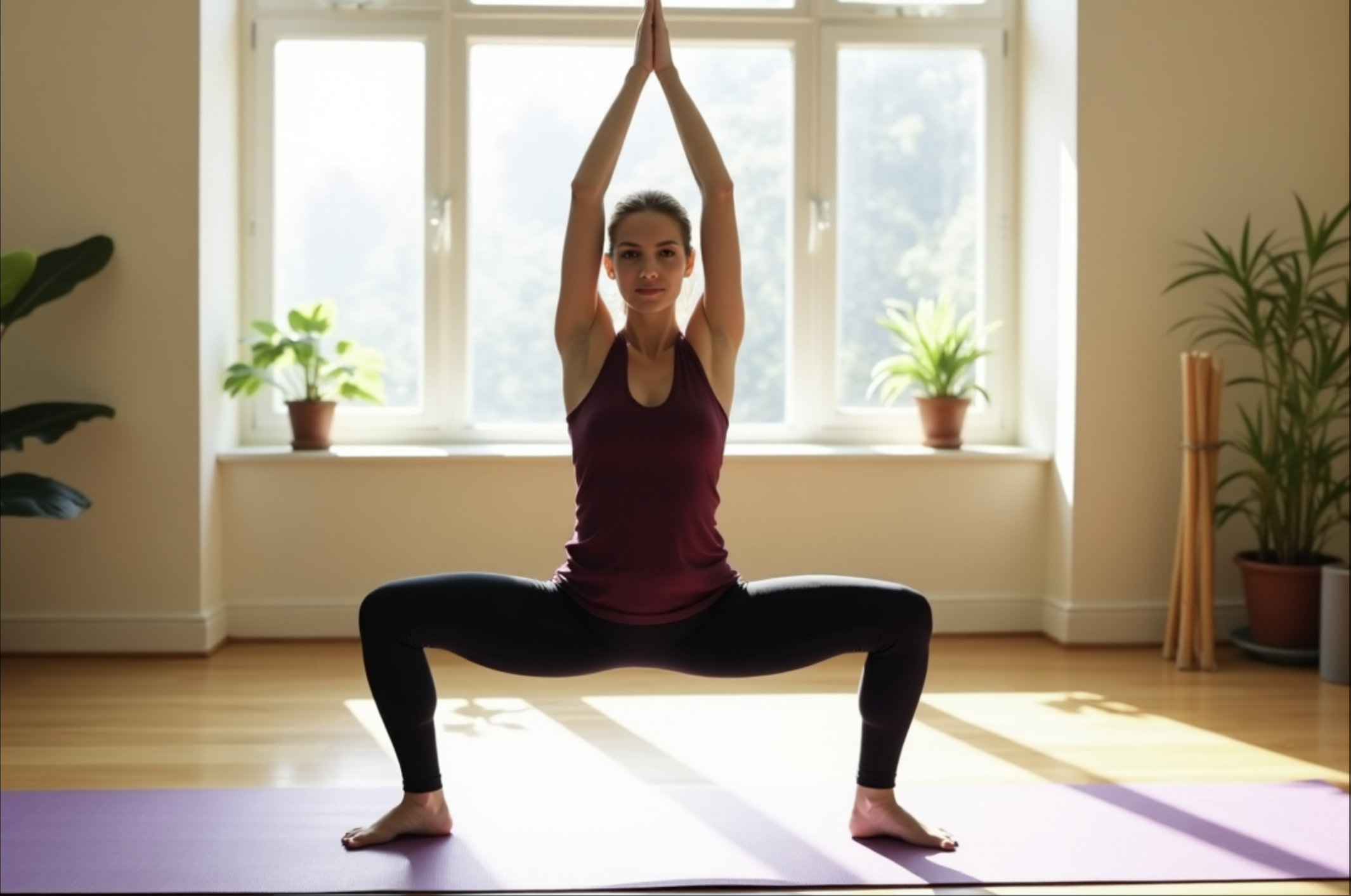
The fierce Hindu Goddess Kali inspired one of yoga’s most strengthening poses. The goddess pose, “Utkata Konasana” in Sanskrit, means “powerful angle posture” – a name that perfectly describes its impact.
This beginner-friendly position might seem simple at first, but it offers impressive benefits throughout your body. The pose strengthens your lower back, glutes, and hamstrings while creating space in your pelvis. It also stands out as a favorite in prenatal yoga sequences and helps reduce menstrual discomfort.
The goddess pose brings something truly special beyond physical strength. Your Root and Sacral Chakras get stimulated in this powerful position. This boost enhances your self-esteem and creative energy while bringing a sense of grounding and calmness.
Let’s take a closer look at how to become skilled at the goddess pose, avoid common mistakes, and unlock its many benefits. This piece will guide you through each step, whether you’re just starting or want to improve your practice.
Table of Contents
Understanding Goddess Pose (Utkata Konasana)
The goddess pose blends strength and grace in the yoga world. Let me share what I’ve learned about this powerful posture’s origins, meaning, and how it fits into your practice.
What does ‘Utkata Konasana’ mean?
The Sanskrit name tells us a lot about this pose’s essence. Utkata Konasana combines three Sanskrit words: “utkata” (powerful or fierce), “kona” (angle), and “asana” (posture). The name translates to “fierce angle pose” or “powerful angle pose”.
This name perfectly captures the strong angles your legs create and the intensity you’ll feel in your lower body. The name reflects the determination and inner strength you develop through this pose. The “fierce” angle comes from your wide leg stance that gets more and thus encourages more energy.
The physical demands of the pose match its name. Your deep squat works your legs, hips, and core, which ended up building remarkable strength in these areas. You’ll feel a sense of power and stability when you hold this position correctly.
Why it’s called Goddess Pose
While the Sanskrit name means “fierce angle pose,” we call it “goddess pose” because it connects deeply with divine feminine energy. The pose shows qualities we associate with goddesses: strength, power, grace, and bold confidence.
Yoga traditions say this pose comes from images of the Hindu Goddess Kali, who stands victoriously in a squatting position during battle. Kali’s fierceness shows the power of feminine energy. Many yogis believe this posture helps them connect with their inner goddess – the divine feminine energy that lives in everyone.
The pose links to several aspects of feminine divinity:
- Connection to Kali: The fierce goddess of transformation and power
- Association with Lakshmi: The goddess of wealth, prosperity, and fertility
- Celebration of Shakti: The original feminine creative force
Your wide stance with turned-out legs looks like ancient birthing positions, making it a symbol of feminine creative power. This posture teaches you to take up space confidently and embrace your strength.
When to include it in your yoga practice
Goddess pose works well for different practice goals and skill levels. This beginner-friendly pose gives you important benefits and fits into many yoga sequences.
For general practice benefits:
- Work on hip opening and lower body strengthening
- Build focus and mental concentration
- Create heat in your body
- Prepare for harder hip-opening poses
For specific populations and needs:
- Prenatal yoga: Creates space in the pelvis to help with pregnancy, labor, and delivery
- Women’s health: Helps reduce menstrual symptoms and hormonal issues
- Stress reduction: Grounds you and balances emotions
The pose works great to balance and activate your first two chakras. Your feet root down and hips open wide in Utkata Konasana to stimulate the Root and Sacral Chakras. This can improve your self-esteem, self-awareness, confidence, and creative energy.
Goddess pose fits perfectly in:
- Flow yoga sequences that boost energy
- Hip opening sequences
- Chest and groin opening practices
- Grounding practices that regulate emotions
Start with poses that warm up your hips and groins, then add strength work for thighs and glutes. After holding goddess pose, use gentle poses to release tension in your hips and lower body.
To conclude, goddess pose does more than just improve your body. You’ll feel empowered while getting stronger, more flexible, and emotionally balanced – making it a great addition to your yoga practice.
Preparing Your Body for the Pose
Your body needs proper preparation before trying the goddess pose. This helps you get the most benefits while avoiding injury. The pose just needs good hip mobility and lower body strength. Taking time to warm up properly is vital for everyone, regardless of their level.
Warm-up poses to open hips and groin
A gradual approach to opening your hips and groin creates the right mobility for good alignment. The goddess pose works to strengthen your whole body, especially your glutes, legs, and feet. Good preparation will help you experience these benefits safely.
Start your practice with these effective hip and groin openers:
Cat-Cow Pose: Start with gentle flowing movements between these poses to loosen your hip and thigh muscles. This simple flow brings more blood to your hip area.
Low Lunge (Anjaneyasana): This pose stretches your hip flexors and quads well. Move from Downward-Facing Dog, bring one foot between your hands, drop your back knee, and sink into your hips. Hold for 5-8 breaths each side to lengthen your hip flexors.
Three-Legged Downward-Facing Dog with Hip Opening: Start in Downward Dog, raise one leg, bend your knee and open your hip. This variation helps open your hip flexor to get ready for deeper poses.
Wide-Legged Forward Fold (Prasarita Padottanasana): This pose opens your inner thighs and groin, making it perfect to prepare for goddess pose. Stand with wide feet, fold forward from your hips, and let gravity deepen the stretch naturally.
Bound Angle Pose (Baddha Konasana): Sit and bring your feet’s soles together with knees out. This directly stretches your adductors and groin. Bring your heels closer to your body for more stretch.
Malasana (Garland Pose): This deep squat opens your hips and strengthens your lower body. You can practice against a wall at first if balance is hard.
Use gentle movements instead of holding stretches at first. This helps lubricate your hip joints and increases blood flow.
Strength-building poses for thighs and glutes
The goddess pose mainly works your thighs, glutes, hips, and core. Building strength here first creates a solid foundation for good alignment and staying power in the pose.
Chair Pose (Utkatasana): Known as the goddess pose’s “younger sibling,” this pose works your quads, hamstrings, calves, core, back, and shoulders. It builds lower body strength while preparing you for the goddess pose’s wider stance.
Chair Pose with Variation: Lift one leg slightly off the mat to work your legs harder and engage your quads more. This tests your balance while strengthening your supporting leg.
Warrior Poses: Warrior II builds strength in your quads, hamstrings, and glutes while improving leg stability. The stance needs external hip rotation, like in goddess pose.
Bridge Pose: This works your glutes and hamstrings as you lift your hips. It strengthens your posterior chain, creating balanced muscle development.
High Lunge: Your front leg gets a great quad workout while your back leg stretches the hip flexors. To increase intensity, try small pulses while keeping good alignment.
Many yoga teachers suggest holding these strengthening poses longer to build leg muscle endurance. On top of that, it helps to actively engage your muscles by consciously working your quads, hamstrings, glutes, and calves for stability.
Note that you need to balance strength and flexibility for the best results. Practice these prep poses 2-3 times a week to build the foundation for a stable goddess pose.
Keep good alignment throughout each pose. Watch your knee position carefully—they should track over your toes without collapsing inward. This practice will help you maintain proper form in the full goddess pose.
Step-by-Step Guide to Entering Goddess Pose
Let’s learn how to become skilled at the goddess pose by getting your feet, knees, and arms in the right spots. Here’s a simple breakdown of this powerful pose that will help you practice with confidence.
Foot placement and stance width
Start by finding a spot on your yoga mat where you can stand with your feet spread wide. You’ll want about 3 to 4 feet between your feet, based on how tall you are. This creates a strong base to work from.
Point your toes out at a 45-degree angle to make a V-shape with your feet. Some people find it easier to point their feet toward opposite mat ends – right foot goes right, left foot goes left. Your feet should point the same way your knees will face when you bend them.
A stable foundation comes from pressing down through all four corners of each foot – the big toe mound, pinky toe, inner heel, and outer heel. This keeps you from rolling to either side of your feet. Many students find their balance improves by putting more weight on their heels and outer edges.
Knee and hip alignment
Now bend your knees and lower your hips into a squat. Try to get your thighs parallel to the floor, though you might not get there right away.
The most vital alignment tip is to keep your knees right above your second toes. Make sure your knees point exactly where your feet are pointing. Your knees should never roll in or bow out – this puts too much stress on your joints.
Keep your spine safe by tucking your tailbone slightly toward the mat while lifting through your pelvic floor. Draw your belly button toward your spine to support your lower back. Your ears should stack over shoulders, and shoulders over hips to create energy flow through your body.
Arm positions and variations
After you get your feet and legs arranged, you can try different arm positions. The classic position includes:
- Arms at shoulder height
- Elbows bent 90 degrees
- Palms facing forward or toward each other
The goddess pose works with many arm variations based on your experience:
- Hands on hips: Great for new students working on leg alignment
- Prayer position: Palms together at heart center helps you focus
- Cactus arms: Arms out to sides, elbows bent 90 degrees, palms forward
- Eagle arms: Wrap arms in front to open your shoulders
- Overhead arms: Arms straight up, palms facing each other
Keep your shoulders relaxed down from your ears and lift through your chest. Your arms should stay active and engaged in any position you choose.
You’ll end up in a full goddess pose – wide feet turned out, knees bent and lined up, tall spine, and arms in your preferred position. Stay here anywhere from one breath to ten, depending on what works for you.
Common Mistakes and How to Fix Them
Even experienced yogis find it hard to get their alignment right in goddess pose. You can improve your practice right away and protect your joints by spotting these common errors. Let’s get into the three most frequent mistakes and how to fix them.
Knees collapsing inward
The knees falling inward instead of tracking over the toes is one of the most common alignment errors in goddess pose. Your knee joints face unnecessary strain and the pose becomes less effective when this happens.
Why it happens:
- Weak adductor muscles (inner thighs)
- Tight outer hips
- Poor awareness of proper alignment
- Squatting too deeply before building enough strength
How to fix it: You need to press your thighs open while keeping proper foot alignment to fix this. Picture yourself pushing against invisible resistance with your outer knees. Beginners can practice with their back against a wall to get feedback on their alignment.
Keep your knees directly over your ankles throughout the pose. If your knees move inward, reduce your squat depth for now and focus on alignment. Your strength will improve over time, and you’ll be able to deepen the pose with proper form.
Leaning too far forward
Your lower back gets strained and the pose loses its energetic balance when you lean or hunch forward. This often happens as people try to make up for tight hips or weak thighs.
Why it happens:
- Disengaged core
- Squatting too deeply
- Tight hip flexors pulling the torso forward
- Hunching to reach arm positions
How to fix it: Check if your back is rounded first – if it is, try bending your knees more. This helps your stomach connect with your thighs for better stability. Then carefully test how far you can straighten your legs while keeping your spine long.
You can also prop your heels on a rolled mat or blanket. The extra height gives your hamstrings more length and teaches your body to spread weight evenly between heels and forefeet, which stops the forward lean.
Your spine should stay long while your core stays engaged. Picture a string pulling the crown of your head toward the ceiling to help with proper alignment.
Overarching the lower back
The goddess pose can lead to overarching the lower back, just as with other squat positions like Chair Pose. This creates pressure on your lumbar spine and reduces how much you use your core.
Why it happens:
- Weak core muscles
- Anterior pelvic tilt
- Lifting the chest without proper support
- Too much focus on lower body position
How to fix it: Core stability is key here. Use your abs and tuck your tailbone slightly to prevent too much arching. Think about lifting your pubic bone while keeping length in your spine.
These techniques can help you practice this engagement:
- Lower your tailbone toward the ground as you engage your lower belly
- Find neutral spine by balancing between arched and rounded back
- Take deep breaths throughout the pose and notice if you hold your breath in tough moments
Your weight distribution plays a big role in keeping your back aligned. Make sure your weight spreads evenly across both feet, especially through the heels. This grounding helps prevent patterns like overarching.
Note that proper alignment in goddess pose takes practice. Quality matters more than quantity, so increase your holding time gradually as your alignment gets better.
Goddess Pose Variations for All Levels
You can add new dimensions to your practice once you master the simple goddess pose. These modifications challenge different muscle groups and make the pose available to practitioners of all levels.
Goddess Pose on toes
Your goddess pose experience becomes more intense when you come up onto your tiptoes. Start by checking your feet and ankle alignment. Keep the simple goddess position and lift both heels off the mat until you balance on the balls of your feet.
This variation substantially increases your calf and core workout while boosting overall balance and stability. Your body stays alert through the extra challenge of maintaining balance on tiptoes. Many practitioners find this variation helps build stronger ankles.
Practice near a wall or sturdy surface for support until you develop enough strength and balance to do it independently.
Revolved Goddess Pose
The twist in goddess pose (Parivrtta Utkata Konasana) combines lower body strength with spinal rotation benefits. Start in your standard goddess position. Put your hands on your knees while keeping your tailbone tucked and your hips and thighs rotated externally.
Turn your torso to one side. Let the opposite shoulder drop between your hips as the other shoulder rises. Take 2-3 breaths, return to center and repeat on the other side.
This variation offers many more benefits beyond the standard pose:
- Stimulates internal organs
- Boosts core engagement
- Improves spinal mobility
- Releases upper body tension
Chair-supported Goddess Pose
Chair support makes goddess pose available to everyone, whatever their mobility limitations or balance concerns. This adaptation works great for seniors, pregnant women, and people recovering from injury.
Sit at the chair’s edge with feet wide apart and toes pointing outward for seated practice. Keep your core engaged and spine extended while your knees line up over toes.
You can also use the chair for standing support. Place it in front and lightly hold the backrest for stability as you lower into the pose. This helps you build confidence and proper form without worrying about balance.
The chair-supported version provides the same benefits as the traditional pose. We focused on hip and groin opening while reducing knee and ankle strain. You can hold this variation longer and work deeper in the hip area without tiring other body parts.
How to Build a Goddess Pose Sequence
A well-designed sequence around goddess pose will help you get the most benefits while keeping your body safe. Your yoga practice will reach new heights with thoughtful preparation and recovery around this powerful posture.
Best preparatory poses
Your body needs gradual hip opening and leg strengthening to prepare for goddess pose. Start with gentle movements to get blood flowing to your hips. Your body responds well to circular hip movements and neck openers without putting too much strain.
These poses work great in sequence:
- Mountain Pose to Chair Pose: This builds essential thigh strength before widening your stance
- Triangle Pose: Your hips open while your legs stay engaged
- Extended Side Angle: Your external hip rotation deepens – perfect for goddess pose alignment
- Garland Pose (Malasana): This pose stretches your groin and inner thighs in a similar way
Add Standing Forward Bend to stretch your hamstrings before moving to wider positions. Many teachers suggest Star Pose as the final step – stand with wide legs and extended arms – before moving into full goddess pose.
Follow-up poses to release tension
Your hips and thighs need counterbalancing poses after practicing goddess pose. We used Legs Up the Wall position to reverse blood flow in the legs.
Wide-Legged Forward Fold comes next to release inner thigh tension. This pose balances out the external rotation and strengthening from goddess pose.
Side Lunge (Skandasana) brings relief by stretching your hips in different directions. Bound Angle Pose works well too, especially if you add a forward fold while seated.
Goddess pose fits nicely into flowing sequences. Star Pose pairs with it beautifully in standing flows like Chandra Namaskara (Moon Salutation). Your strength will build by holding goddess pose for 30-60 seconds. Try 3-5 repetitions with short breaks between holds.
Conclusion
Goddess pose is evidence of how yoga blends physical challenges with spiritual connection. This powerful posture offers remarkable benefits to practitioners at every level when they prepare properly, line up correctly and practice mindfully.
You need patience and dedication to become skilled at the goddess pose. The simple variations help you make steady progress safely. Your body gets stronger with regular practice, and it also awakens your inner power and confidence.
Each time you step into goddess pose, you connect with an ancient tradition that celebrates strength and grace. Your body will guide you. Respect your limits and celebrate small improvements along the way.
The goddess pose shows us that true power comes from balanced effort – neither forcing nor holding back. Keep taking them regularly, stay mindful of proper form, and let this fierce yet graceful posture change both your body and spirit.
