
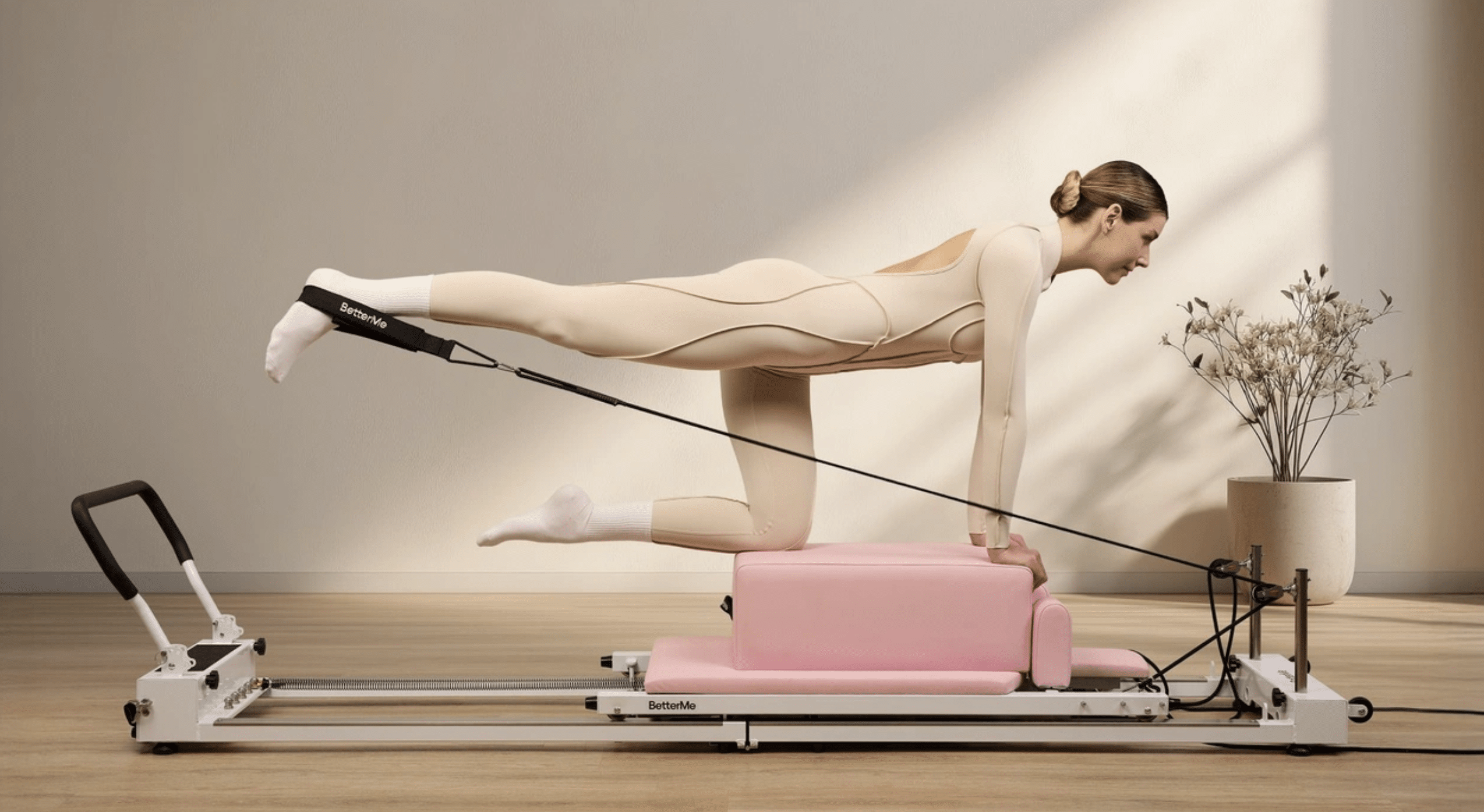
If you’re reading this, there’s a decent chance you just booked your first Pilates class and realized you have no idea what to put on. You’re not alone — surveys show that more than 60% of first-time Pilates students worry about wearing the wrong outfit.
The good news: Pilates doesn’t require anything exotic. The bad news: what works for running or lifting weights can actively work against you in a Pilates studio. Loose gym shorts get caught in reformer springs. Cotton tees end up draped over your face during roll-downs. Regular socks turn the carriage into a slip-and-slide.
This guide covers exactly what to wear, what to skip, and why it matters — for mat, reformer, wall, and heated Pilates classes. Men included. Budget options included. “I don’t look like a Pilates influencer” anxiety addressed.
Table of Contents
The Quick Answer (If You’re Running Out the Door)
Wear high-waisted leggings or bike shorts in a stretchy, moisture-wicking fabric. Pair them with a fitted tank, sports bra, or form-fitting tee that won’t ride up when you fold forward. Bring grip socks if you’re going to a reformer studio — most require them. Leave jewelry, zippers, and loose clothing at home.
That’s genuinely all you need for your first class. The rest of this guide helps you refine those choices and avoid the mistakes that make Pilates harder than it needs to be.
Bottoms: The Single Most Important Piece
Your leggings or shorts do more work in a Pilates class than any other garment. They need to stay in place during rolling, bridging, inversions, and transitions between lying down and standing up. If you’re constantly pulling up your waistband, you’re not doing Pilates — you’re managing your wardrobe.
Why High-Waisted Wins
High-waisted leggings that sit at or above your natural waist anchor everything. During a roll-up, your torso goes from flat on the floor to upright. During the hundred, your legs hover at 45 degrees while your core fires. In both positions, low-rise or mid-rise bottoms slide down. High-waisted styles stay put because there’s more fabric contact area holding them in place against your body.
The Squat Test
Before wearing any leggings to Pilates, do a deep squat in front of a mirror. If the fabric goes sheer across your glutes, they’re not opaque enough. If the waistband digs in hard enough to leave marks, size up. If the fabric restricts your ability to take a full breath, the compression is too heavy. You want the fabric to feel supportive without feeling like it’s squeezing you.
Full-Length vs Shorts
Full-length leggings protect your legs on reformer equipment. The straps and carriage surface can create friction against bare skin during exercises like short spine stretch. For mat classes in warm studios, 7/8 length (hitting above the ankle) or bike shorts work perfectly.
Bike shorts are increasingly popular in Pilates — they eliminate excess fabric while still covering enough for modesty during leg work. Just make sure they’re long enough to prevent riding up. A 6-to-8-inch inseam handles most positions without constant adjusting.
Loose shorts are a no-go for reformer classes. They get caught in the spring mechanism, expose more than intended during leg circles, and force you to waste mental energy on coverage instead of form.
Fabric: What Actually Matters
Nylon-spandex blends (roughly 75/25 or 80/20 ratio) give you four-way stretch — the fabric moves in every direction and snaps back to its original shape. This means no sagging at the knees after class and no restricted movement during lateral stretches.
Skip cotton for anything beyond gentle mat work. Cotton absorbs moisture instead of wicking it, gets cold and clingy when you sweat, and loses its shape within a few washes. Technical fabrics like polyester-spandex or nylon-spandex pull sweat away from your skin and dry fast.
Bamboo fabric is worth a look if sustainability matters to you. It wicks moisture naturally, resists odor, and feels soft — though it’s generally pricier and less widely available in performance cuts.
Tops: Fitted Over Flowy, Every Time
Your Pilates instructor needs to see your body alignment to give you corrections. A baggy t-shirt hides your rib position, your shoulder placement, and your spinal alignment — the three things an instructor watches most carefully. It also falls over your face the second you lie on your back and lift your legs.
Fitted tanks and crop tops are the Pilates standard for practical reasons. Racerback cuts free up your shoulder blades for overhead reaches and arm circles. Longline designs extend past the ribcage for more coverage during inversions. Short sleeves with thumbholes work well for reformer classes where the straps rub against bare arms.
For reformer-specific classes, avoid anything with a hood, drawstrings, or dangling ties. These can catch on the carriage mechanism, the springs, or the pulleys. It sounds unlikely until it happens to you.
If you prefer more coverage, a fitted long-sleeve top in a breathable technical fabric works for Pilates without any of the downsides of a loose layer. The key is “fitted” — the fabric should follow your body’s contours closely enough for your instructor to read your alignment.
Sports Bras: Low-Impact Support Is Enough
Pilates doesn’t involve jumping, running, or impact. A low-impact sports bra provides the right level of support without the heavy compression of high-impact designs that restrict your breathing — and breathing is literally the engine of Pilates.
Look for bras with wide bands, adjustable straps, and breathable mesh panels. Built-in shelf bras inside tanks eliminate the need for a separate layer. Longline bras that extend below the ribcage double as crop tops in warmer studios.
One functional tip: hook-and-eye closures at the back allow strap adjustment so nothing shifts during inversions. Pull-on bras work too, but they tend to stretch out faster.
Grip Socks: The One Accessory That’s Non-Negotiable
Most reformer studios require grip socks. Mat studios increasingly recommend them. And even at home, they make a measurable difference — a study published in Frontiers in Medicine found that grip-enhancing footwear improved balance scores by 23% among Pilates practitioners.
Grip socks have silicone or rubber traction pads on the sole that prevent slipping on reformer carriages, mat surfaces, and studio floors. They also serve a hygiene function in shared-equipment environments.
Toeless vs Full-Toe: Which to Choose
Toeless grip socks cut off just before the toes, leaving them exposed. They’re popular for reformer Pilates because they let your toes spread naturally and grip the footbar directly. That natural splay creates a wider base of support during footwork exercises. Many practitioners say they feel more “connected” to the equipment with toeless socks. Downside: not all studios accept them for hygiene reasons — check your studio’s policy before purchasing.
Full-toe grip socks cover your entire foot like standard socks. They’re warmer, more hygienic on shared equipment, and universally accepted at every studio. They work especially well for mat Pilates in cooler rooms and for people who simply prefer full coverage. The trade-off is slightly reduced toe mobility compared to toeless options.
Five-toe grip socks have individual compartments for each toe (like gloves for your feet). They provide the most natural foot position and maximum toe control. The downside: they take noticeably longer to put on, and some people find the between-toe seams uncomfortable during longer sessions.
What to Look For
Full-sole grip coverage outperforms partial-coverage designs (just heel-and-ball dots). On a reformer, your foot contacts the carriage at the heel, midfoot, and ball — scattered dots leave gaps where you can still slide.
A snug midfoot fit prevents the sock from twisting or shifting during planks and lunges. Arch compression bands help with this.
For material, bamboo blends wick moisture better than cotton and stay soft longer. Merino wool blends are another premium option — naturally antibacterial and temperature-regulating.
Budget options like Gaiam ($8-14 per pair) work for casual mat practice. Mid-range picks like Tavi ($18-25) handle regular studio use. Premium brands like ToeSox and DeadSoxy ($20-35) last longer through repeated washing, with grip that doesn’t peel after a few cycles. Quality grip socks last 6 to 12 months with regular use; cheap ones can die in three weeks.
What to Wear to Different Types of Pilates
Reformer Pilates
The strictest clothing requirements. No zippers, buttons, or metal hardware on your back — they damage the reformer’s leather upholstery. No loose fabric that can catch in springs, straps, or the carriage mechanism. Grip socks required at most studios.
Fitted leggings (full-length preferred), fitted tank or crop top, low-impact sports bra, grip socks. That’s the formula.
Mat Pilates
More flexibility in fit since you’re not interacting with equipment. You can go slightly looser if that’s your preference, though fitted still gives better alignment feedback. Grip socks are optional but helpful on studio floors. Barefoot works at home on your own mat.
Wall Pilates
Since wall Pilates is usually a home practice, comfort trumps studio etiquette. You can wear whatever you’d wear for a home workout — leggings, shorts, a t-shirt. The one consideration: if you’re pressing your back against the wall, a smooth-fabric top prevents the bunching and friction that textured or seamed tops create. Skip anything with a zip or button along your spine.
Grip socks help during wall-supported standing exercises where bare feet might slip on hard floors.
Heated or Hot Pilates
Studios running at 85°F or higher change the game. Less fabric is better. Bike shorts and a sports bra (or crop top) are the most comfortable options. Choose the lightest-weight, most breathable fabrics you own — heated studios amplify every material shortcoming. Cotton in a heated studio is miserable.
Bring a small towel and extra water. Expect significantly more sweat than a standard Pilates class.
What Men Should Wear to Pilates
Men’s Pilates clothing follows the same principles as women’s: fitted, stretchy, moisture-wicking, no loose fabric.
Bottoms: Fitted shorts (mid-thigh length, not basketball shorts) or compression tights. Athletic joggers in a tapered, moisture-wicking fabric work too — just avoid anything baggy enough to catch on equipment. Men’s leggings or compression pants are increasingly common in Pilates studios and serve a functional purpose: they let the instructor see leg and hip alignment clearly.
Tops: A fitted performance t-shirt or a sleeveless tank. Avoid anything oversized. The same rule applies: your instructor needs to see your spine, shoulders, and rib position. Loose tanks that gap open at the sides expose too much during side-lying work and create an uncomfortable distraction.
Socks: Same rules as women’s. Grip socks required for reformer. Toeless or full-toe, full-sole coverage.
What to skip: Cargo shorts, basketball shorts, hoodies, loose joggers, anything with front pockets that bunch on the reformer.
Your First Pilates Class: The Complete Prep List
Beyond clothing, here’s everything else worth knowing before you walk through the studio door:
What to bring: Water bottle, grip socks (if reformer), a hair tie if your hair is past your shoulders. Some studios provide towels; others expect you to bring your own. Check the confirmation email.
Hair: Tie it back and keep it flat. A ponytail works for mat classes, but a low bun is better for reformer — a ponytail gets squashed uncomfortably against the headrest when you lie down. Avoid claw clips or large accessories that dig into your scalp during supine exercises.
Jewelry: Remove it. Rings catch on straps. Necklaces swing into your face during inversions. Watches dig into your wrist during plank-based movements. Earrings snag on the reformer headrest. Leave it all in the car.
Arrive early: 10 to 15 minutes before class. Studios usually require a waiver for first-timers, and the instructor needs a minute to orient you to the equipment.
Don’t stress about how you look. Every single person in that room was a nervous first-timer once. Pilates studios generally have a more welcoming, less competitive atmosphere than weight rooms or HIIT classes. Wear what makes you comfortable and lets you move freely — that’s the only standard that matters.
Building a Pilates Wardrobe on a Budget
You don’t need to spend $300 before your first class. Here’s a realistic framework:
The Minimum Starter Kit (Under $80)
One pair of high-waisted leggings in a performance fabric ($20-35 from CRZ Yoga, Old Navy, or H&M Sport), one fitted tank or sports bra ($15-25), and one pair of grip socks ($8-15). That gets you through your first month.
The Sweet Spot ($150-220)
Two pairs of leggings (one full-length, one bike short), two tops (one tank, one fitted tee), two pairs of grip socks, and one warm-up layer. This gives you enough rotation to wash between sessions without running out of clean options.
Where to Save, Where to Spend
Save on tops and layers. A fitted $15 tank from Old Navy or H&M performs nearly identically to a $60 studio-brand tank for Pilates purposes. Tops don’t take the same structural beating that bottoms do.
Spend on leggings. This is where quality matters most. Budget leggings ($15-25 range) tend to lose elasticity within 20 wash cycles, go sheer under stretch, and sag at the knees by month two. Mid-range leggings ($40-75 from brands like Girlfriend Collective, CRZ Yoga Butterluxe, or Sweaty Betty sale items) hold their shape and opacity through hundreds of washes.
Spend on grip socks if you go regularly. A $22 pair that lasts six months costs less per class than a $9 pair that falls apart in three weeks.
Premium brands like Lululemon ($69-98 for leggings) and Beyond Yoga ($99-125) do deliver exceptional comfort and longevity, but you don’t need them to start. If your budget is tight, secondhand platforms like Poshmark and Mercari regularly have premium Pilates wear at 30-50% of retail, often with tags still attached.
Common Mistakes That Make Pilates Harder
Cotton everything. Cotton absorbs sweat and holds it against your skin. It gets cold, clammy, and heavy. It also loses shape fast. Reserve cotton for watching TV, not for Pilates.
Low-rise bottoms. They will slide down during every single roll-up, bridge, and leg lift. You’ll spend half the class pulling them up. Life’s too short.
Loose shorts on the reformer. Fabric gets caught in springs. Shorts ride up during leg circles. You flash the person behind you during footwork. All avoidable with fitted leggings or bike shorts.
Zippers and hardware. Back zippers scratch reformer upholstery (studios will not thank you). Metal hardware on leggings digs into your skin during prone work. Decorative chains and buckles snag on everything.
Perfume or heavy lotion. Pilates studios are close-quarters environments. Strong scents bother other students. Heavy lotions make your hands and feet slippery, reducing grip on equipment and mats. Apply after class, not before.
Skipping the hair tie. Hair in your face during footwork, hair caught under your back during bridges, hair wrapped around a strap during arm work — all preventable with a $1 elastic.
FAQs
Can I Wear Regular Gym Clothes to Pilates?
Standard athletic leggings and a fitted workout top work perfectly. You don’t need Pilates-specific branded clothing. What matters is fit (form-fitting, not loose), fabric (moisture-wicking, not cotton), and function (no zippers, no dangling hardware, no hoods). Most people’s existing gym leggings are fine for Pilates — just make sure they pass the squat test for opacity and don’t have back-panel zippers.
Do I Really Need Grip Socks?
For reformer classes at a studio, yes — most studios require them and will sell you a pair at markup if you show up without. For mat Pilates at home, they’re optional but helpful on hard floors. Research shows grip socks improve balance by 23% during Pilates, so the benefit goes beyond just studio policy. Budget pairs start at $8-14 and work for occasional use; invest in a mid-range pair ($18-25) if you attend class weekly.
What Should Men Wear to Pilates?
Fitted shorts (mid-thigh, not basketball length), compression tights, or tapered athletic joggers. Paired with a fitted performance tee or sleeveless tank. Same rules as women’s clothing: form-fitting, stretchy, moisture-wicking, no loose fabric. Grip socks for reformer classes. Men’s compression pants are increasingly common and serve the same alignment-visibility function as women’s leggings.
Is It OK to Wear Just a Sports Bra to Pilates?
At most studios, yes. Pilates studios tend to be less formal than you might expect. Sports bra and leggings is one of the most common outfits you’ll see in class, especially in warmer studios or during summer months. If you’d feel more comfortable with more coverage, a fitted tank or crop top over your sports bra works just as well.
How Many Outfits Do I Need for Regular Pilates?
If you attend two to three classes per week, two complete outfits give you enough rotation for washing between sessions. That’s two pairs of leggings (or one legging and one bike short), two tops, and two to three pairs of grip socks. Add a warm-up layer and you’re set. You can build from there as your practice becomes more established.
What Should I Wear to a Heated Pilates Class?
As little as you’re comfortable in. Bike shorts and a sports bra are the most practical combination for studios running at 85°F or higher. Choose the lightest, most breathable fabrics you own. Bring a towel and extra water. Heated studios turn every fabric shortcoming into a problem — heavy fabrics get soaked, cotton becomes unbearable, and non-wicking materials trap heat against your skin.
References consulted during research:
- “What to Wear to Pilates: Complete Outfit Guide 2026” — Klodsy (April 2026)
- “Best Workout Clothes for Pilates in 2026” — Violate The Dress Code (April 2026)
- “Best Pilates Grip Socks: 8 Brands Compared (2026)” — DeadSoxy (June 2026)
- “What to Wear to Pilates” — Under Armour (evergreen guide)
- “What to Wear for Pilates: 6 Stylish Pieces” — Loony Legs (March 2026)
- “What Men Wear for Pilates: Complete Clothing Guide 2026” — Warrior Addict (February 2026)
- “What to Wear to Pilates | Expert Guide” — BK Pilates (March 2026)
Making Your Pilates Clothes Last
Performance fabrics aren’t cheap, and treating them right extends their lifespan dramatically.
Wash cold, hang dry. Heat degrades spandex and elastane — the fibers that give your leggings their stretch and recovery. A hot dryer cycle does more damage to compression fabric in one load than dozens of cold washes. If you must machine dry, use the lowest heat setting.
Skip fabric softener. Softeners coat fibers and block the microscopic channels that wick moisture. Your leggings will feel softer for a wash or two, then stop performing entirely. Same applies to dryer sheets.
Wash grip socks inside out. This protects the silicone grippers from friction with other clothing in the wash. Air-dry them exclusively — dryer heat melts and deforms silicone traction patterns. A quality pair of grip socks treated this way lasts 6 to 12 months of weekly use.
Don’t leave sweaty clothes in your gym bag. Moisture-wicking fabrics are engineered to pull sweat to the surface and evaporate it. When you ball them up in a sealed bag, the moisture has nowhere to go. Bacteria multiply. Odor sets in. The fabric degrades faster. Hang sweaty clothes to air-dry as soon as you get home, even if you can’t wash them immediately.
From Studio to Street: Styling Pilates Outfits for After Class
One practical advantage of Pilates clothing is that it transitions to everyday wear more easily than most workout gear. The fitted, neutral-toned pieces that work best in class also read as clean athleisure outside the studio.
The simplest transition: swap grip socks for white sneakers or slides, throw an oversized crewneck or denim jacket over your sports bra or tank, and add a crossbody bag. You’re coffee-shop-ready without a wardrobe change.
Matching sets make this even easier. A coordinated legging-and-top combo in a solid neutral tone (black, navy, olive, oatmeal) already looks intentional and put-together. Add a structured layer on top and nobody clocks you as freshly out of class.
If you lean toward the unitard trend, these one-piece designs layer beautifully under wide-leg pants, oversized blazers, or chunky knit cardigans. The form-fitting base disappears under the outer layer, giving you a completely different silhouette for errands or lunch.
The convenience factor matters for people with packed schedules. If you can go from a 7 AM reformer class to a 9 AM meeting with just a jacket swap and a shoe change, you eliminate the friction that makes skipping class tempting on busy mornings.
Body Confidence in Pilates: Wearing What Works for You
If the idea of walking into a studio in form-fitting clothes feels intimidating, you’re not unusual. Pilates marketing skews toward a very specific body type, and it can make newcomers feel like they need to look a certain way before they even start.
Here’s what’s true in practice: Pilates studios tend to be among the most welcoming fitness environments. The lights are often low. Everyone’s focused on their own body and their own form. Instructors work with every body type, every day.
If wearing skin-tight leggings makes you uncomfortable, here are workable alternatives that still let an instructor see your alignment: fitted (not tight) joggers in a tapered cut, knee-length compression shorts with a slightly looser fitted tee, or high-waisted leggings with a longline sports bra that provides more torso coverage than a crop top.
Inclusive sizing has improved significantly across the activewear market. Brands like Girlfriend Collective (XXS to 6XL), Old Navy (XS to 4X), and Athleta (XXS to 3X) offer performance leggings across extended size ranges. If you know your measurements, online shopping with free returns can be less stressful than browsing in-store.
The priority is always function over appearance. Clothing that lets you move freely, breathe deeply, and stay focused on the workout serves its purpose regardless of what brand name is on the label or what size is on the tag.
